During WWII
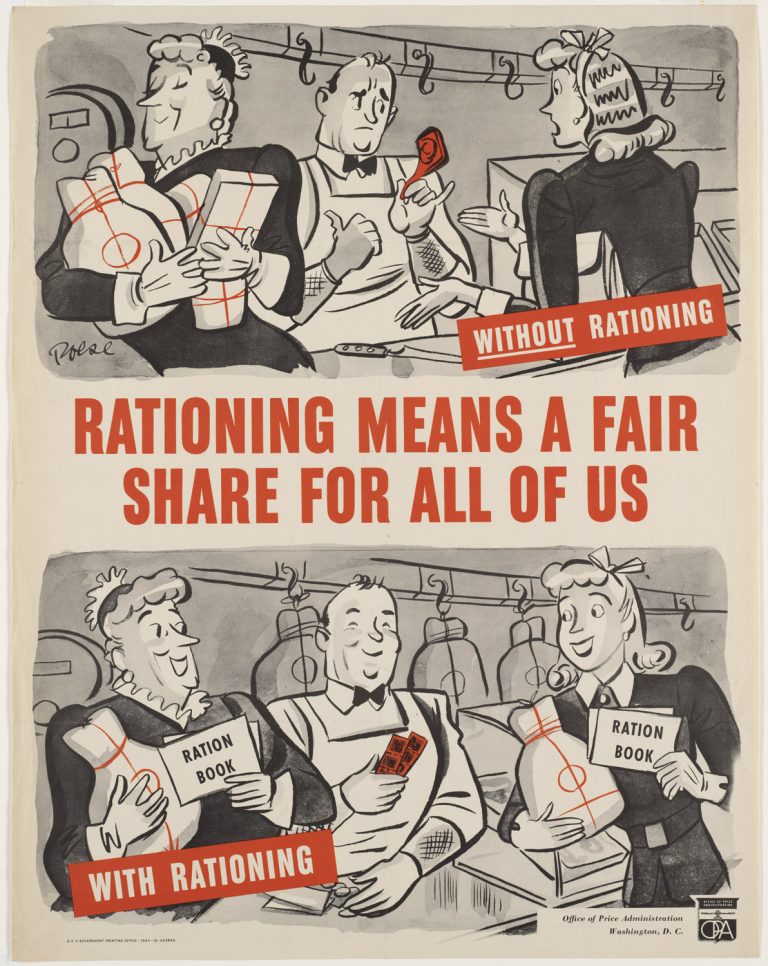
War Ration Books were issued to each American in 1942 after the United States officially entered WWII. They were created due to deficits in crucial war materials. Stamps available for rationing were altered according to a persons age. An example of this would be that children under the age of 15 did not have coffee stamps in their ration books.
rootsofdiscovery.me
Finding a stack of War Ration Books proved to be a great asset to my genealogical research on my husbands side.
His grandmother Rose moved to California for a short time before until just after WWII. She lived with extended family. Her ration book provided me with the address she lived at during that time period. It was a thrill to find it.

His Great Grandparents, Concetta and Anthony Finazzo, also had recorded vital information on their ration books. They had to list their age, height, weight, occupation, address, and signature.
.

Neighbors would trade rations and recipes. millions planted Victory Gardens all in the name of Patriotism and much needed fresh food.
As I went through the War Ration Books I found a newspaper clipping in one of Concetta’s ration books. The stamp prices fluctuated and the way to get the word out for pricing was the local newspapers. This is her newspaper clipping she saved from the St. Louis Star Times Paper on May 6, 1945.

The stamp process and food availability really changed the way cooking and kitchens ran during WWII.
If a person used a 10 point stamp from their War Ration Book for a 7 point pork chop the person lost the 3 point difference. In addition to food rations, tires, gasoline, appliances, tin, shoes, nylon, coal, firewood and the like were all rationed as well.

the average citizen was rationed a max of 5 gallons of gasoline a week.
That would get them access to in town needs like church and shopping. 8 gallons a week of gasoline was the ration for factory workers and salesman. Government officials, police officers, doctors, truckers and bus drivers didn’t have gas limitations. War Ration books don’t hold monetary value as millions were issued and many saved.
However, they are a time capsule of what life was like for our relatives living in the United States during WWII. They also provide some valuable information for genealogy researchers! Do you have ration books in your collection?
How do you document and catalog the historical items in your home and navigate your own history? Check out this post for an example how to do it.







 Roots of Discovery
Leave a comment