
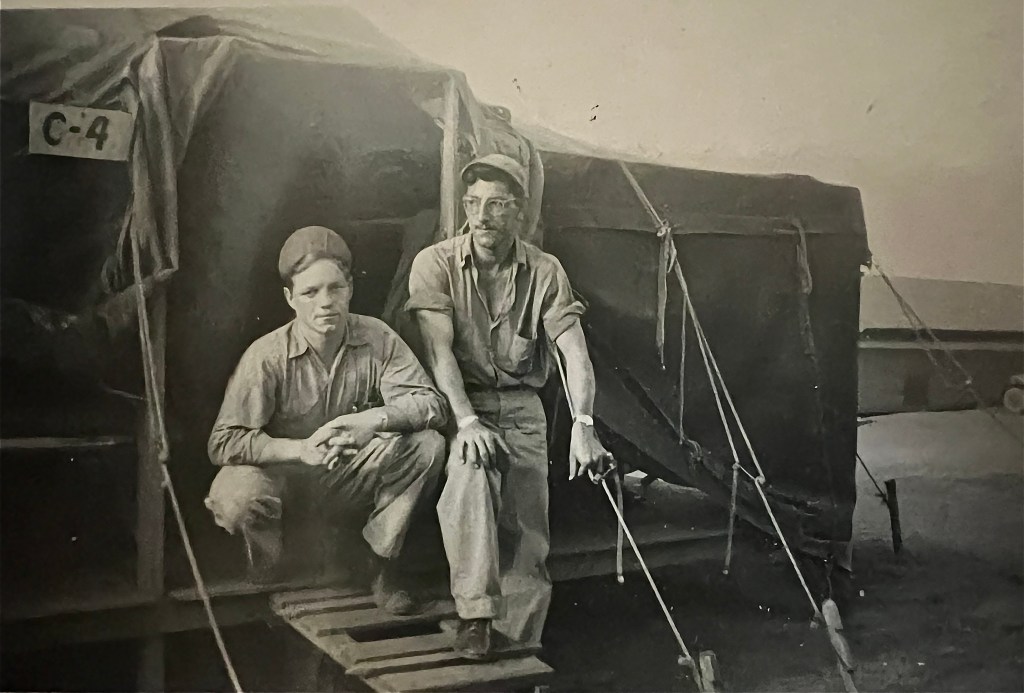
My husbands great uncle Phil J. Finazzo penned his personal journey from becoming a WWII Seabee to his experiences with war. In part one he discusses his life until the end of boot camp. It wasn’t long after training that he writes about his participation in the Battle of Iwo Jima. His personal account was rewritten several times on loose-leaf lined paper and I was lucky enough to have acquired copies. We are so proud of his service and all the men and women who gave so courageously.
May 23, 1998
In the Beginning
Some two years have passed when I first began writing about my life in the service and how I got there. I grew up in St. Louis, MO along with four brothers, my sister Rose, our parents, and whole lot of relatives. I was born on February 9, 1918 and we rolled on thru the 1920’s, 30’s and 40’s. Well, maybe not that fast. Being in the 1990’s now makes it seem so far away.
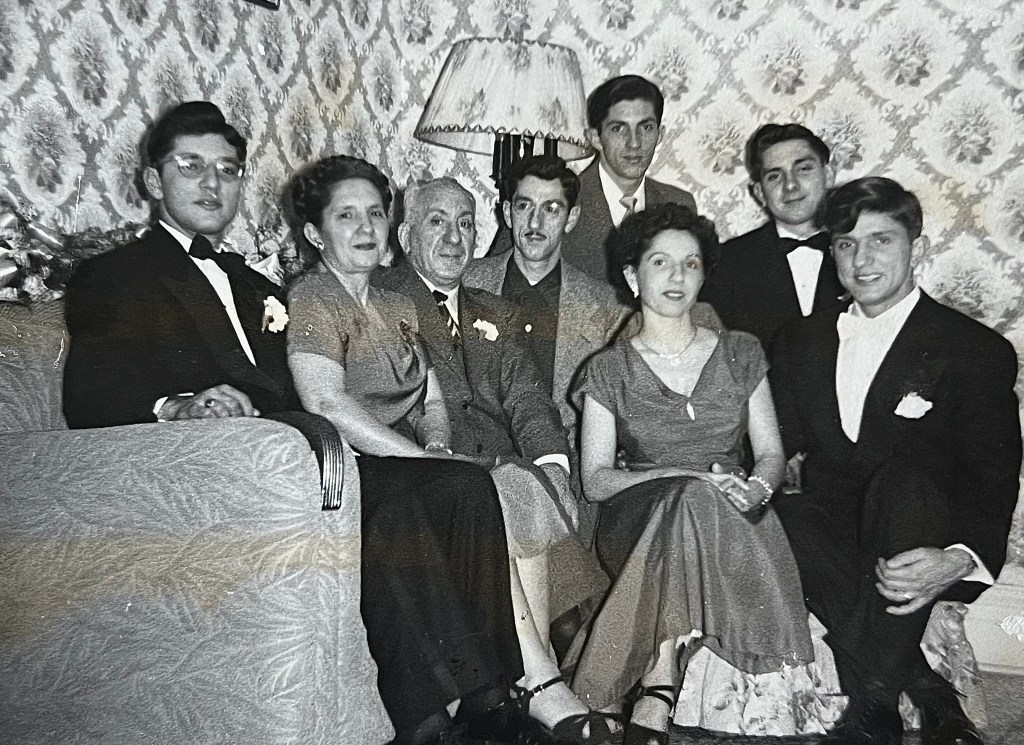
Oh, there were some tough times with dad whom I remember as a go getter. He was in and out of jobs such as a carpenter, a shoe repairer, a pasta factory worker, running pool halls and then setting up and making bootleg whisky. There were more jobs he had that I can’t recall.
I do know that one way or another he always managed to put food on the table.
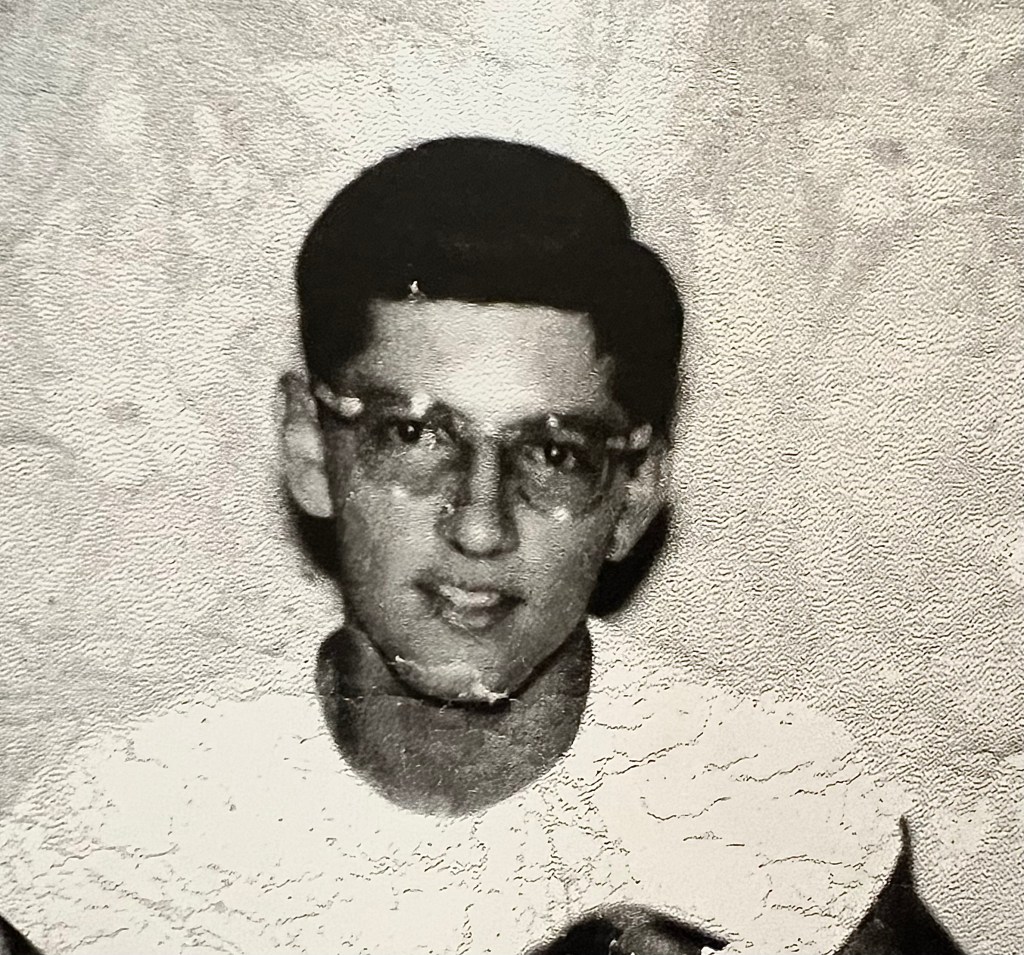
I remember my first job. My dad paid $25 to a Concannon Insurance agent who was friends with the owners of the Jake-Evans Manufacturing Company to help me get a job. I became a spray painter and made .43 an hour. Sometimes I brought home as much as $18 a week. I worked there for five years, married Martha in 1939, and then joined the Navy.
Never having been out of Missouri a whole new life opened up for me.
In the Navy
My service started August 10, 1943 when I received a government letter that said ‘Greetings Mr. Phil J. Finazzo.” From that day on I had no idea where I’d be. I was told to report to the Jefferson Barracks Inductions Center in St. Louis, MO. I stood in line nervously waiting my turn to see where I would go.
And it was here I stood in the first of many lines to come.
It was also here where I asked if I preferred the Army or the Navy and of course I said Navy. I didn’t think I could get in because I couldn’t swim and wore glasses. That’s when they told me I would be assigned to the Seabees. I was beginning to feel out of touch. Who were the Seabees? I found out they where a newly formed branch call the U.S. Navy Construction Battalion.
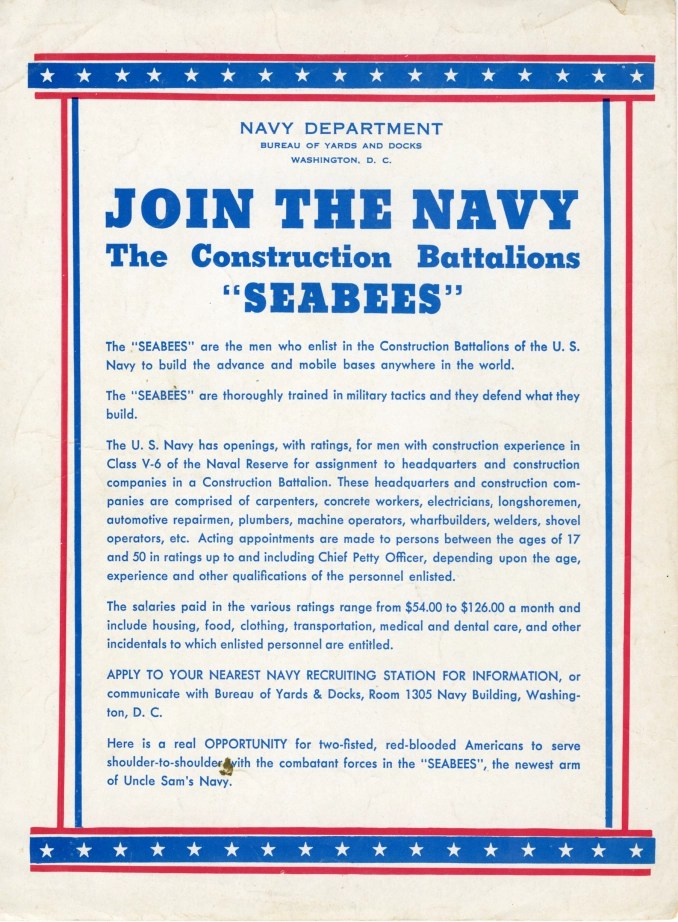
In the Seabees Boot camp
We were assembled in a group and told what the Navy expected of them or ”us” as I am now one of the group. We were gathered into small groups and shipped to Seabee Training Camp Peary near the outskirts of scenic Williamsburg, Virginia. To many of us it was our first venture out into a new part of the country. We boarded the train and dressed as light as possible.
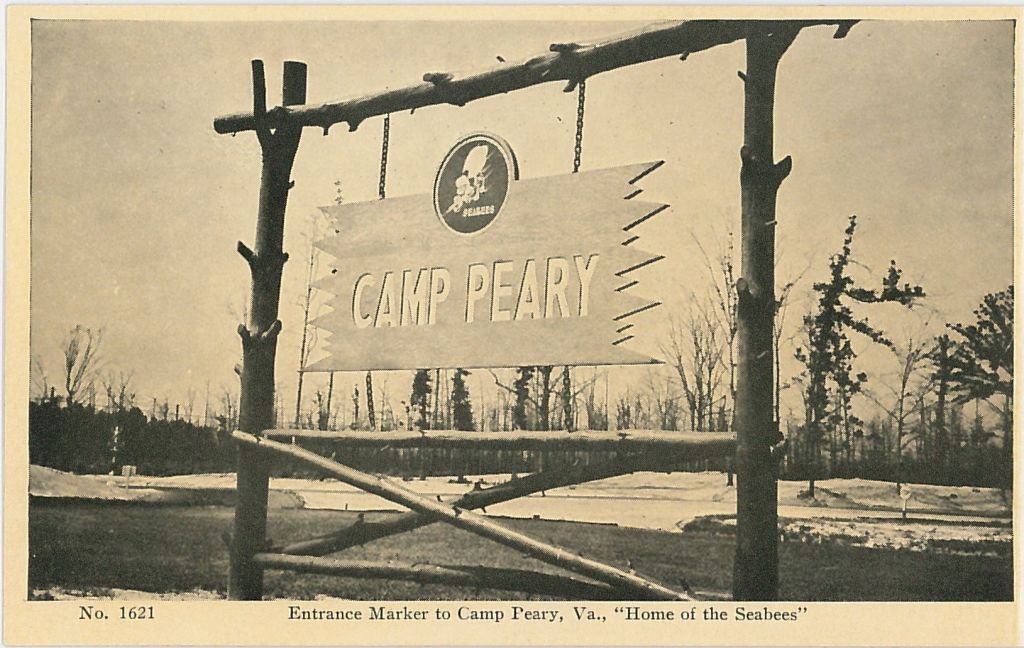
We knew when we arrived at the camp all of our clothes and items would be thrown away and shipped home.
The talk (or scuttlebutt as it was called) between us was, “What is boot camp? What’s it like? How long would we be there? Do they cut off all your hair? Do the shots hurt?” Most of the time the answers came as they happened.
Camp Peary will probably last the longest in our memories. It was where we were greeted with that phrase, “You’ll be Sor-ree.” I remember the railroad sided convoy trucks that hauled us into the induction area. Then we were turned loose in barracks that had double decker bunks with mattresses. Everyone cleaned up as best they could in the head that wasn’t in good condition.
We were led to supper in a group. We went up and down a hill, over a cinder patch that filled our shoes, and into a big chow hall. I don’t remember what we had. I think it was ok but everyone wanted to know what the hell they did to the coffee. After supper we were led to a cleared off area with a platform. There was an instructor on top of the platform with a list of names and he had a smartass manner. He took muster of us and then assigned us to barracks for the night.
It didn’t take very long before everyone was sound asleep.
The next morning we were up bright and early. After breakfast we were led to the front of our barracks. We did 20 minutes of exercise that we didn’t need. We were told to strip to the skin but each of us kept one sock where we could put our valuables. Cardboard boxes were given to each man in which all our civilian articles of clothing were to be put. We filled out express labels and left them to be shipped to our homes.
While naked we were x-rayed and numbered on our shoulders with mercurochrome and we received a partial issue of clothing.
We each received a pair of jeans, underwear, a t-shirt, and shoes. At least we now had something to wear. The issue of our gear was the next event. We lined up again and received a mattress cover that served as a bag. Then we carried the bags up and down counters where clothing of every sort was hurled into them by the storekeepers. We received work clothes, underwear, socks, dress and undress blues, whites, hats, towels and soap. All of this went into the big bag. Then we received another mattress cover filled with buttons, sea bags, pillows and blankets that was all bundled together.
Now we had two bulky bags (a lot of weight) to lug around.
Staggering under this load we kept going from place to place. We would set the bags down when we had to go inside a building. I couldn’t believe what were were going through but you do what you gotta do and keep going. Then came a big shock! The GI haircuts! The haircuts were a big come down for most of us. The barbershop men were anything but barbers. They cut off our hair quick like ‘zip-zap!’
It left me feeling naked and light headed and the distance between military and civilian began to show.
We were then run through the photo section in dungaree shirts and our close cropped skulls. A number was placed in front of us for our ID cards. Boy, I felt like a broken car being gone over by some alley mechanics. Then came the stenciling room where we were lined up again and told how to arrange our clothes for stenciling. Stencils were already cut with our names and when we finished everything went back into the bags.
Somewhere along the way we had our noon meal and now we lined up for our evening chow. After dinner the same platform instructor began checking the muster list and assigning us to truck numbers that will take us to the detention area. Before midnight, trucks had arrived for all the groups and we were hauled to our various barracks in the D-10 area. We bedded down for the night. This whole inductions deal had been completed in one long hectic day.
Now were were ready to commence boot training. Can you believe it?
In real Boot Camp
Now we were definitely in boot camp. We were housed in long bunked barracks that held two platoons of sixty men with a chief in charge. We learned how to make beds and leave it ready for daytime instructors, how to hang our sea bags, and made sure no clothing or gear was out at any time. It all had to be stowed away in our sea bags and from now on we had to learn to live out of those bags. There were no chairs, tables, or dressers.
Nothing was like we had in civilian life.
An instructor was placed in complete charge of each barracks. It was his job to turn out 60 well trained sailors at the end of a few weeks of training. Right now he had 60 untrained green boots. It was tough going and we were on a schedule from sunrise to sundown leaving no time to ourselves. I was falling in or out of a line every time I turned around. We listened to lectures on military courtesy and where and when to salute. There was a lot of things going on that kept us busy. The days were divided into periods like school.
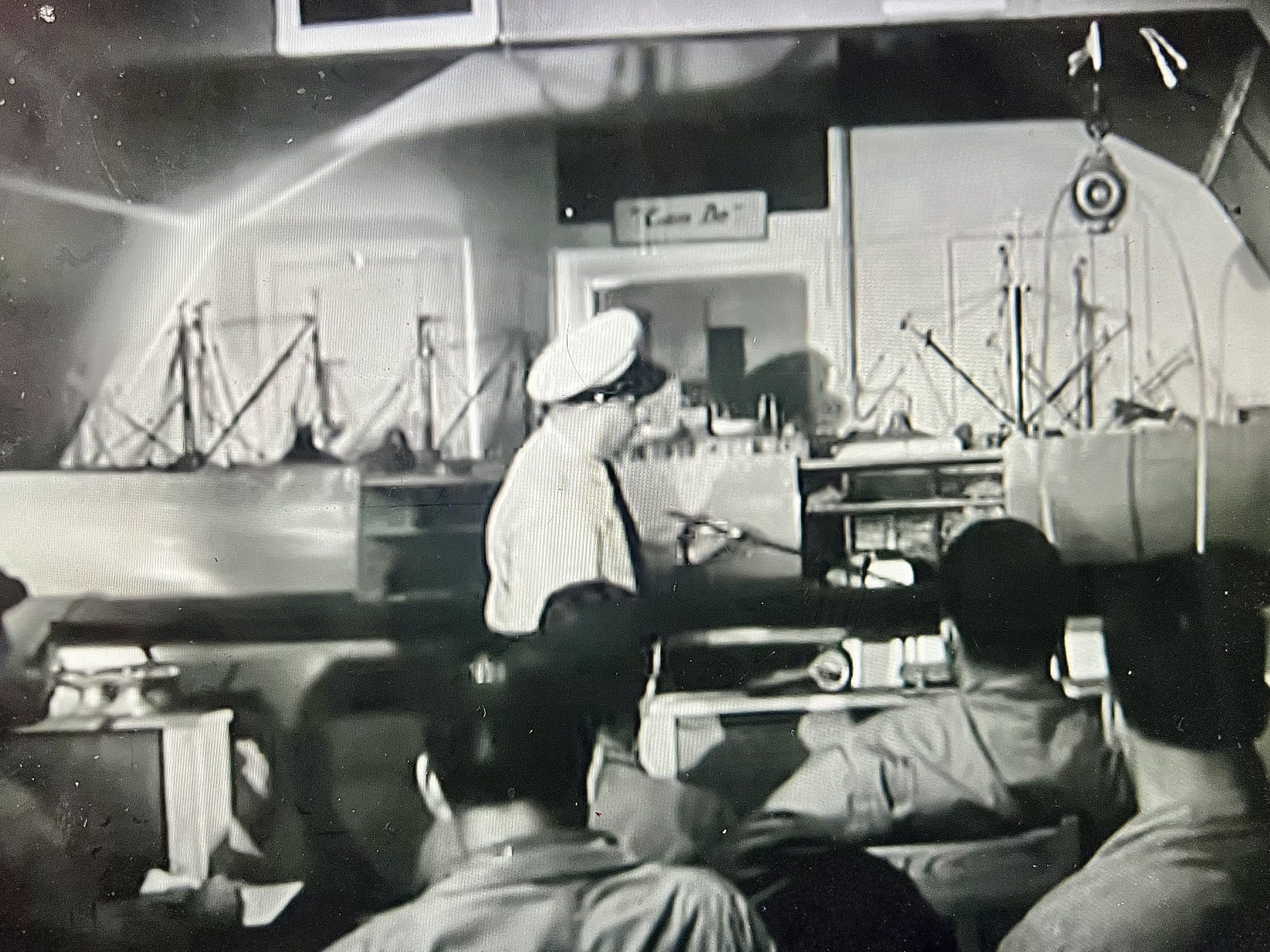
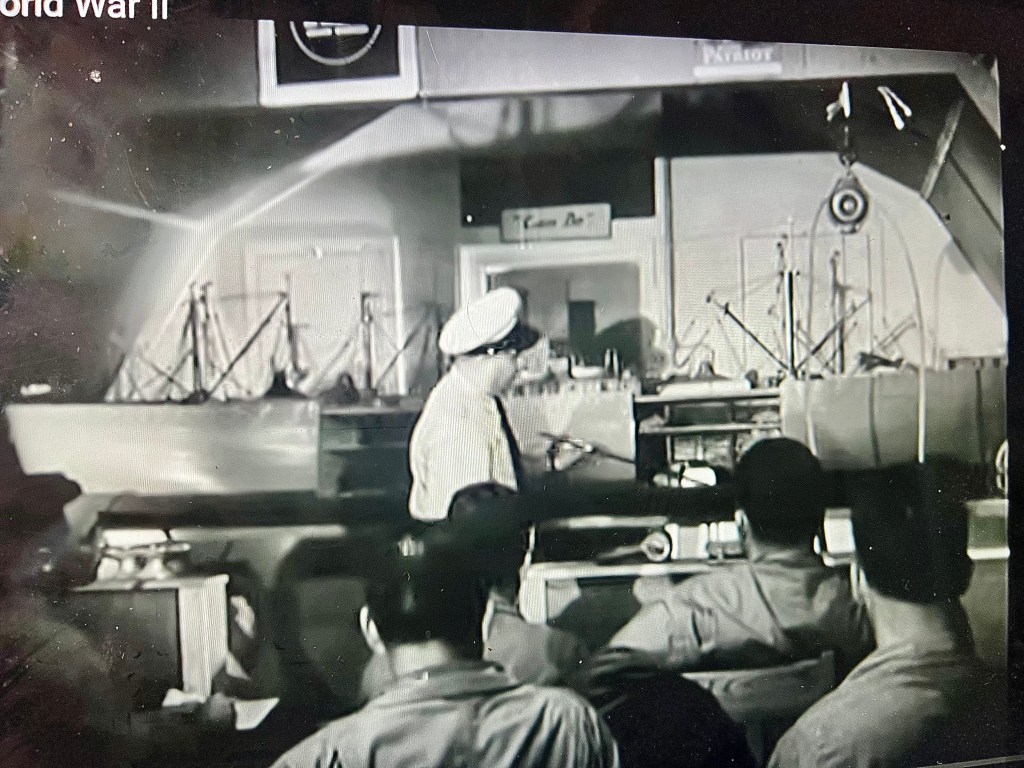
There were periods of close order drills, lectures on sex and personal hygiene, regulations, chemical warfare, and security.
After spending hours of drilling, trying to master the manual of arms, working with machetes, hand grenades’, bayonets, and signaling with flags it felt like the day would never end. Then came our first taste of military discipline. It was a heavy schedule with drills leaving us where we could hardly stand up. This was followed with lectures. It made me realize how easy we had it at home from going to school and having common laborer jobs.
Our barracks had to be swept down and scrubbed every morning after early PT (physical training) followed by breakfast and then drilling and classes. During the hectic weeks in boot camp we found out why were we issued so many clothes. It was to keep us busy in the odd moments. We were either changing, washing, or rolling them up properly. All of this had to be done by hand. Then we had to lay them out for inspection.
The days advanced and so did our training.
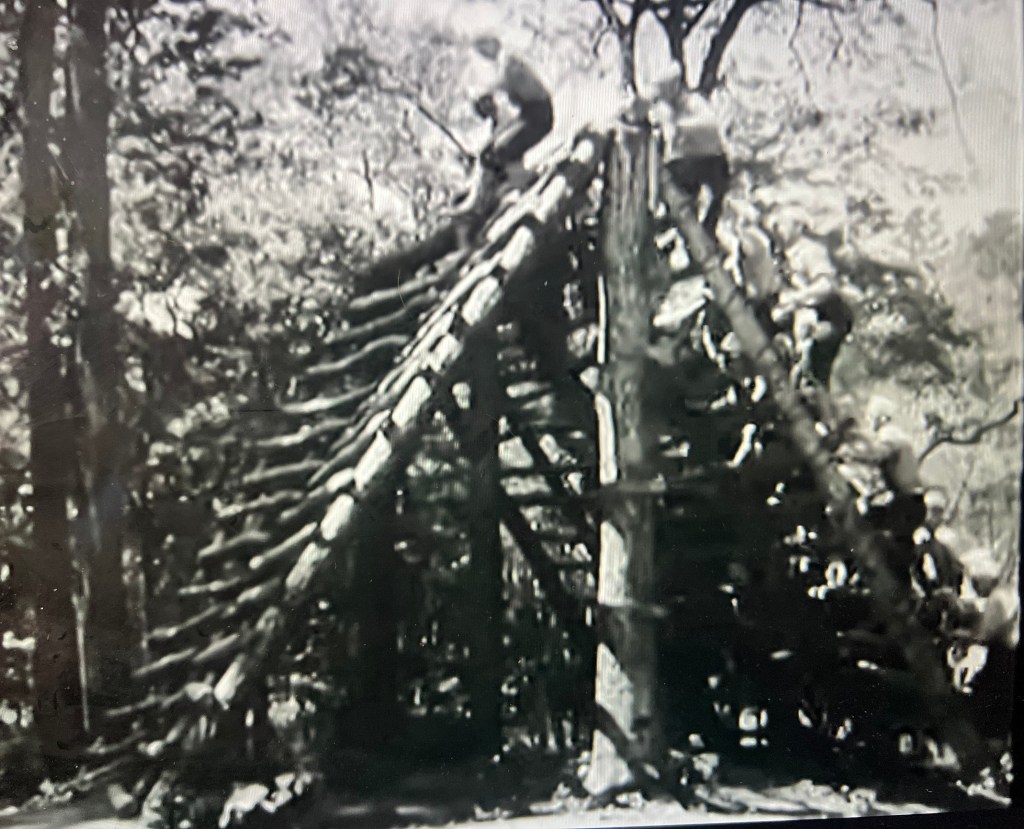
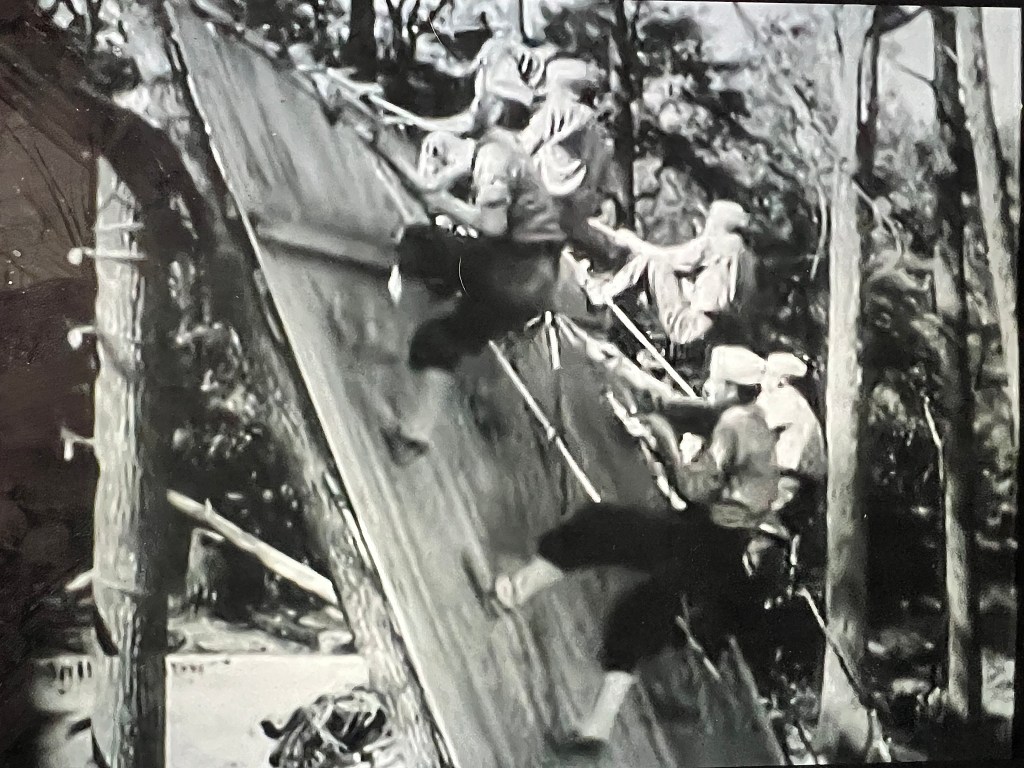
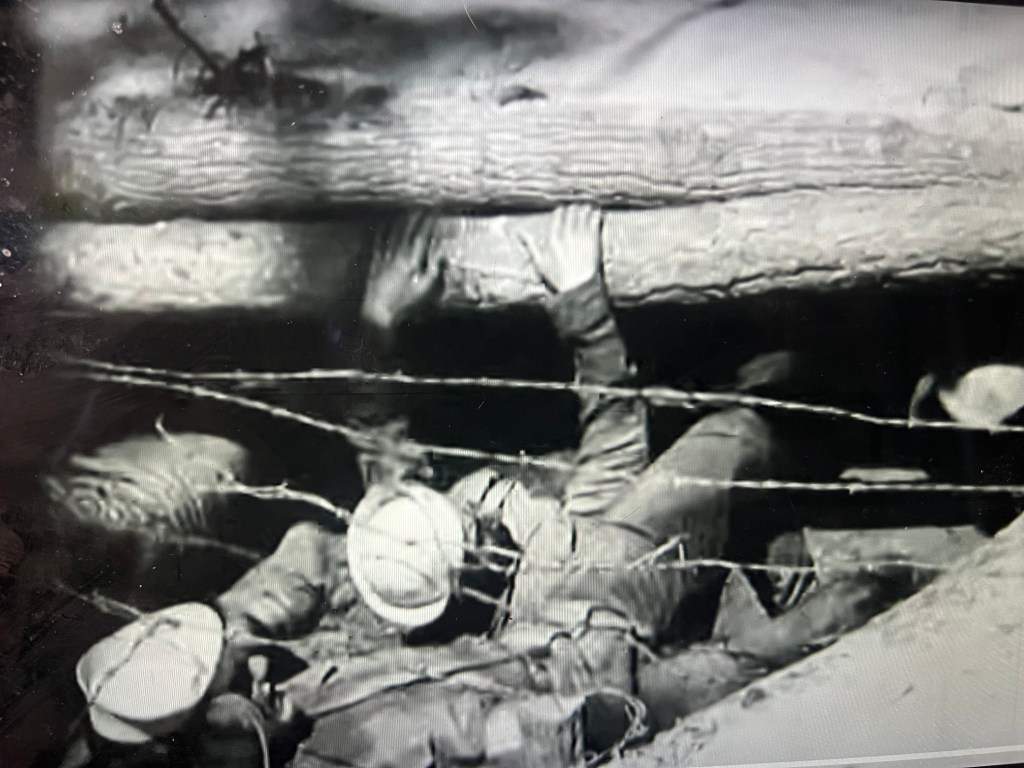
We began taking long hikes through the wooded section of camp and working out military problems under simulated battle conditions. They wanted us in the best physical condition in the shortest time possible. Then came the obstacle course that would test our stamina. We climbed walls, jumped ditches, swinging and climbing ropes, and crawling under barbed wire. It was pretty tough. There were a lot of things I didn’t like about training but I hated KP (kitchen patrol).
My cousin, Big Phil, stopped at the island and I was on KP. Several days later another cousin, Buster, looked me up and again I was on KP. I shouldn’t complain because they gave me time off to visit and go into town both times. The reason the first Phil was called Big Phil was because he was the biggest of the Phil’s. Also, Buster was a nickname and no one ever called him Phil. I was Little Phil.
It was happy days when we were told our boot camp training was nearly over.
Our final days were spent reviewing the numerous subjects, doing more drills and preparing for our final review. After this was over we knew that it was the end of boot camp and we would move out of the area. The evening before we were to leave we were summoned to the drill field. Each of our names were shouted and we each answered. We were told our assignments and nearly all the men were assigned to the 133rd battalion.
We were given a company number and platoon. I was placed in company C platoon. That night everyone had to pack their bags. This process was hampered by last minute inspections. The next morning our sea bags were carried to the drill field and stacked in the assigned places. We reported to the drill field later in the day and found that the parade ground was sectioned off by company and platoons. I found my platoon and Chief Hunter took a muster.
Convoy trucks took us us out of the boot area and dumped us at the B6 drill hall. It was big enough to hold over 1000 men. This was the first of many places the 133rd was to occupy. Our outfit spent the next 4 days there. From here I traveled to Port Hueneme on the California coast and then to San Pedro, California. On the night of April 30, 1944 we boarded the USS Leonard Wood. By noon we were secured aboard and we moved out into the bay where the convoy was forming.
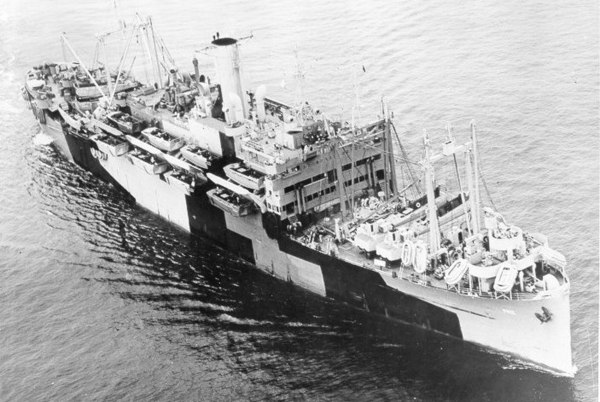
By late evening we steamed out of the bay and into the swells of the Pacific.
Our ship was now called the USS Lucky. On the morning of May 9, 1944 we moved through the channels to dock along with the many ships of the convoy. Our battalion, the 133rd, had been through eight months of training. We arrived at the Naval Air Station in Honolulu where we were scheduled to do a large scale construction job. We had one day off a week and great weather that we all liked.
The month of work and play from Honolulu, Oahu, and Maui would soon come to an end.

In Part 2 Phil J. Finazzo takes us through his experiences in the Battle of Iwo Jima. Click here to read it!
In the beginning of this post you read about Phil’s dad and his various jobs. I wrote about his bootlegging days. Click here!
Want to see Jefferson Barracks Historic Site and National Cemetery? I have a one day itinerary for you that is tested and true! Click here!



 Roots of Discovery
Leave a comment