After discovering the Blackwell Pioneer Cemetery 14 years ago I fell head over heels into researching this family line. Tracing the Missouri Blackwell’s back to the 1600’s in New York was amazing and renovating the cemetery has been rewarding. However during my research of this family patriarch, Jeremiah Blackwell (1783-1855), I discovered he was a slave owner.
fINDING THIS OUT SADDENED AND SPURRED me TO research his slaves SO THEY CAN HAVE THEIR HISTORICAL DUE.
A probate record, filed 6 months after Jeremiah died, captivated me and gave me some answers. I began to read through the itemized list of Jeremiahs assets. The next section was a list of any debts from the deceased (Jeremiah) or his spouse at the time of his death. This section listed a bill for a court filing from a lawsuit a few years before.
LUCKILY THE LAWSUIT WAS ATTACHED TO THE PROBATE RECORD.
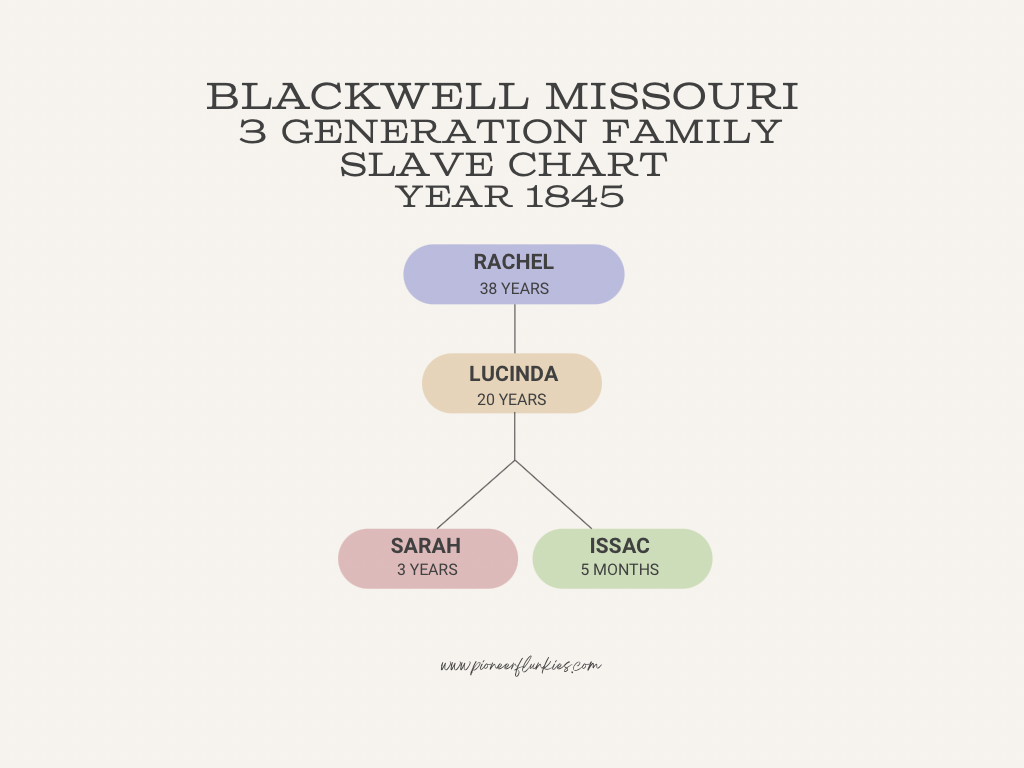
The probate record brought more information to light that I could have ever imagined. In 1845, when Jeremiah was 62 years old, he sold 4 slaves to George A. Boltz from New Orleans, Louisiana. The 4 slaves were sold to George for $800 and fortunately they were recorded by name and age. They were listed as Rachel (38), Lucinda (22), Sarah (3), and Issac (5 months).
HAVING THEIR NAMES BROUGHT ME TO TEARS.
Within the lawsuit records it also listed that Jeremiah acquired Rachel in October of 1823 by a women named Jane Creswell when Rachel was 22 years old. The probate then recorded Rachel as Lucinda’s mother. Sarah and Isaac were listed as Lucinda’s children. In addition, Sarah and Issac were described in the court records as ‘mulatto.’ That term, mulatto, is a despicable and obsolete classification for a person of both African and European lineage.
Jeremiah and the three generation slave family made their way to New Orleans, LA from Missouri in October of 1845. At that time New Orleans was a free city for people of color. Jeremiah met with George at the court house and recorded the sale and George paid Jeremiah the amount due.
THEN JEREMIAH HAD A LAST MINUTE CHANGE OF HEART.
Right before Jeremiah was to bring Rachel, Lucinda, Sarah and Issac to George for the exchange he broke his contract. Jeremiah attempted to return the $800 to George and call off the sale. Jeremiah had filed paperwork to free this slave family in the city New Orleans and he gave them their liberty. This made George extremely angry with Jeremiah for releasing them.
George, unknowingly to Jeremiah, was a broker of people (slaves).
George had already sold and split this slave family with two men in Louisiana for a profit. When Jeremiah didn’t follow through with the sale it resulted in George being unable to fulfill his contractual sales to his customers. He was upset to loose out on his profits and to break two contracts tarnishing his business name.
Within a year of the broken contract George sued Rachel, Lucinda, Sarah and Issac. He claimed that he purchased them before they were freed in the city and needed to be returned to him as his property and back into slavery. During this months long lawsuit Lucinda had died. She left her children to her mother Rachel who battled this out in court alone.
THE CITY OF NEW ORLEANS UPHELD THE FREEDOM AND LIBERTY OF THIS GRANDMOTHER AND HER GRANDCHILDREN.
I was so thrilled for them but George was not. After George lost that lawsuit he then sued Jeremiah. George wanted restitution from the original sale and also wanted to recoup his losses from the subsequent contracts. Jeremiah was willing and agreed to pay for breaking the initial contract but contested the payment for the subsequent contracts due to him knowing nothing about them.
THE COURT RULED IN GEORGE’S FAVOR. JEREMIAH PAid FOR ALL THE BROKEN CONTRACTS WITH INTEREST.
Jeremiah lived long enough to finalize the lawsuit and pay restitution to George but died before he could pay for the court filings. If it wasn’t for the timing of his death I don’t know if I would have found these court records. Jeremiah ended up paying a hefty sum for the release of his slaves and I can’t help but wonder why he did it.
DON’T GET ME WRONG-I AM THRILLED THAT the slave family WERE GIVEN THEIR FREEDOM.
The knowledge of the children being of mixed race has me curious if these children were related to Jeremiah. Was he their father? Their Grandfather? Lucinda was a slave at the time of her children’s births and had no autonomy over her body or the decisions made in regards to it. This angers me for her.
It also makes me wonder if there is family out there that I am related too due of this troubled history.
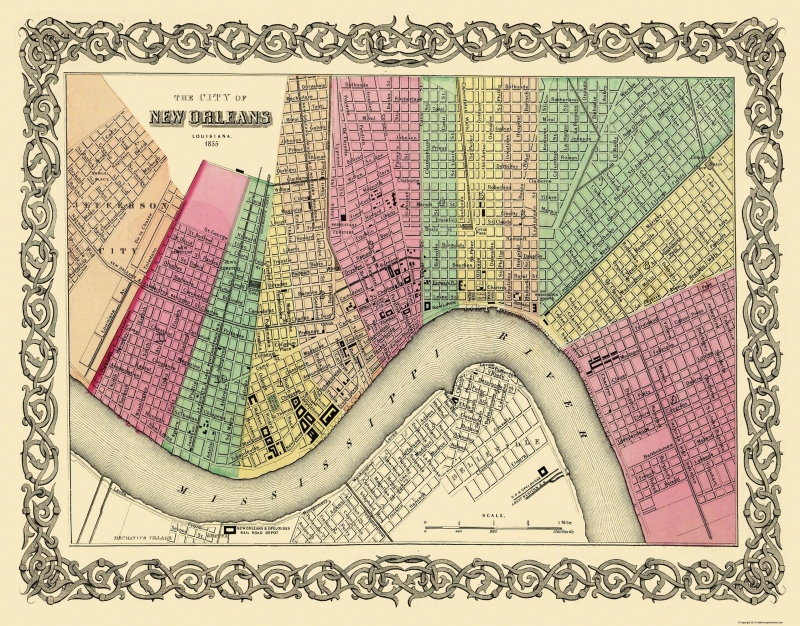
I need to make a trip to New Orleans, LA and begin diving into the court records to search for Rachel, Sarah and Issac and try and trace their lives after they won their freedom in court. Regardless of our potential connection I want to know if they survived and hope that they thrived in freedom for generations.
I am immensely thankful I was able to bring their memory back and into the hearts of all who hear about this slice of their story. I encourage all genealogist to not hide the dark parts of their family trees. The world needs to know about other Rachel’s, Lucinda’s, Sarah’s, and Issac’s and how important their stories and lives are.







 Roots of Discovery
Leave a comment