And the history of AVIATION in st. louis
It seems fitting that I think of my grandmother, Jeannette Gamache Moersch, during women’s history month. Jeannette, alongside many other women, went to work making plane parts in St. Louis during WWII.
Women rose up and fought their own fight during a time when our country needed them.
Jeannette learned how to physically put planes together as a riveter for the Curtiss-Wright Plant at Lambert Airfield. At the time, women needed an invitation to enter the workforce. Especially at a job once exclusively for men only. How did that come about? Well, lets start with the history of St. Louis Lambert International Airport.
St. Louis Lambert International Airport has its own historical past. Named and created after Albert Lambert who was the first person to earn a private pilots license from the Wright Brothers in 1911. He dreamed of making St. Louis, MO an aviation powerhouse and invested his time and resources to try and make that happen.

The land that St. Louis Lambert International Airport sits on now was originally a 550 acre hayfield called Kinloch Field.
The nations first flight club, The St. Louis Aero Club, was located at Kinloch Field. It had a small but official airfield. By the end of 1909 Kinloch Field was a known flight haven.
Theodore Roosevelt made history here in October of 1910. the nation witnessed the first flight of a president to ever take place.
Albert Lambert purchased the field in 1920 and spent his own time and money to grade 170 acres to create a proper airfield complete with airplane hangers. Not long after, the newly minted Lambert Airfield was a workable passenger and freight location.
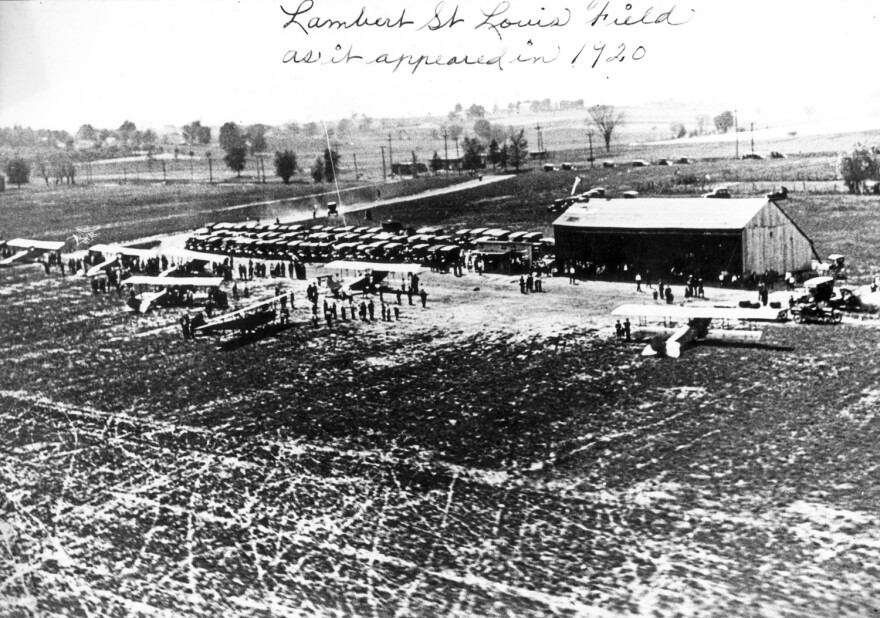
In 1928 St. Louis City bought the airstrip and land from Lambert. Drastic improvements were made to the property. By 1939, James McDonnell formed the McDonnell Aircraft Company at Lambert alongside the Curtiss-Wright Corporation.
With the start of WWII, Lambert expanded into a massive military production site.
A huge new runway was installed and wartime needs awarded Curtiss-Wright 60 acres to build a plant dedicated to making plane parts. By the time the Curtis-Wright plant in St. Louis, MO was complete, the need for workers to produce product was desperate. They turned to women who never dreamed of working this ‘Man’s Job’ before now.
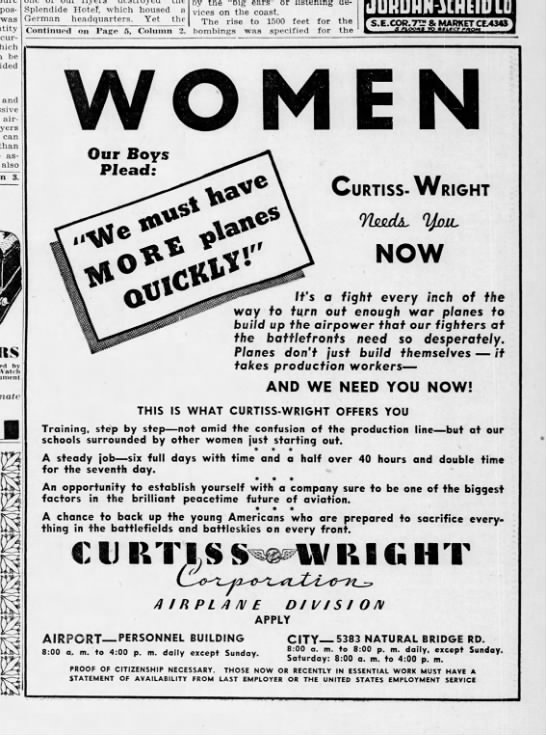
St. Louis, Missouri 28 Apr 1943, Wed
My grandmother, Jeannette, answered the call. With her husband away at war on the front lines (read his story here) she decided to help the war effort the one way she could.
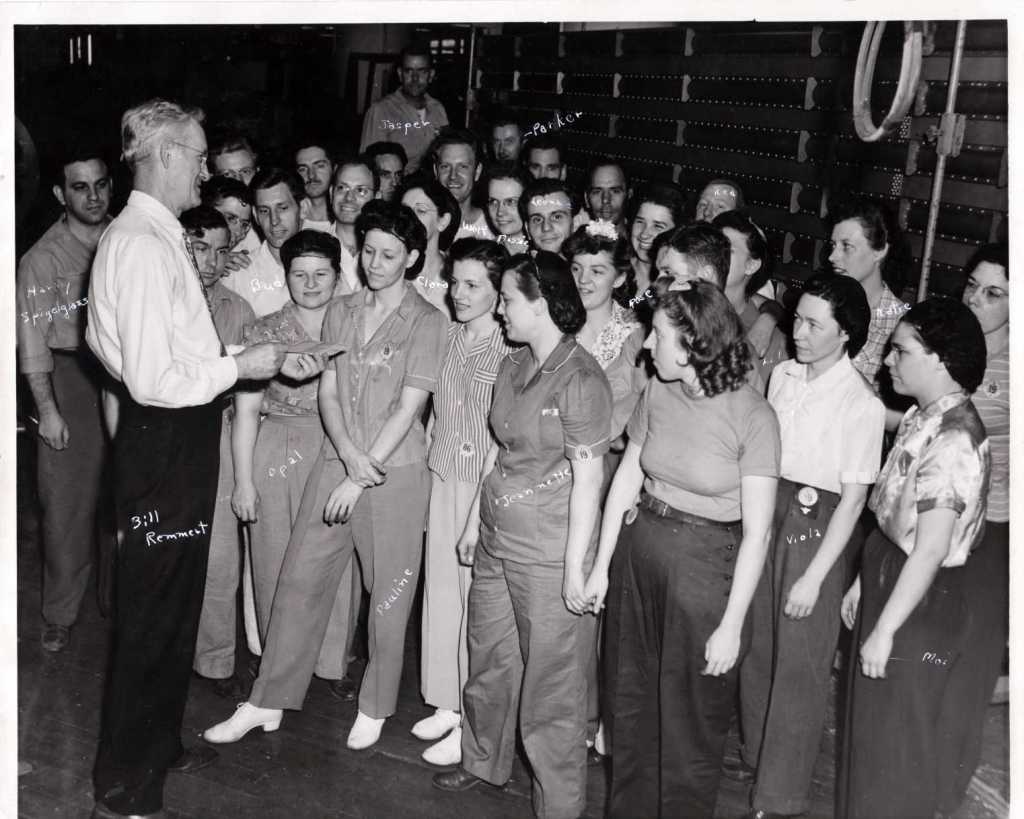
Jeannette worked in the Curtiss-Wright plant as a Riveter.
As you can see in the picture below, everyone has a button badge affixed on their clothes. Her badge hangs in my house to remind me how she entered the workforce with bravery and in her way helped to turn the tides of war.
After the war the St. Louis Curtiss-Wright plant was taken over by McDonnell Aircraft Company. The plant has been closed and the building has sat empty since 2002. The St. Louis Lambert International Airport now sits on a 2,800 acre site. They fly both domestic and internationally. Have you flown out of Lambert? Did you know this history?
My grandma Jeannette was a brave and forward thinker who branched out and began a career. I am so proud of her. Do you have a female relative who worked for Curtiss-Wright?
If you want to know about another amazing women in my family tree check out my Hill Doctor Ancestor Post!







 Roots of Discovery
Leave a comment